
Finance teams do not struggle with consolidation because they lack tools. They struggle because complexity scales faster than their processes can keep up. As organizations grow across entities, geographies, and ownership structures, traditional approaches to financial consolidation quickly become unsustainable, even when a platform like Sage Intacct is already in place.
The challenge is not platform capability. It is aligning how you use the tool to where your organization actually stands in its consolidation maturity. According to APQC benchmarking data, top-performing finance teams complete the monthly close in 4.8 calendar days, while median performers take 6.4. If your team is spending more time reconciling the past than informing the future, your consolidation process deserves a closer look.
Why does consolidation complexity grow faster than finance teams expect?
Consolidation complexity is not a technology problem; it is a maturity alignment problem. What begins as a manageable set of manual journal entries and spreadsheets often evolves into a fragmented, time-consuming close cycle that limits visibility and delays decision-making.
Common symptoms that indicate a misalignment between process maturity and platform use include:
- Manual intercompany eliminations completed outside the system
- Inconsistent data across entities that requires repeated reconciliation
- Lack of standardization in account structures or chart of accounts
- Heavy reliance on spreadsheets to supplement or replace system outputs
- Limited auditability and difficulty tracing entries back to source transactions
If any of these are familiar, the issue is rarely the platform itself. It is how the platform is configured and used relative to the organization’s current structure and growth stage.
Understanding Consolidation Maturity in Sage Intacct
Consolidation maturity is not one-size-fits-all. There is no single “right” model. There is only the model that aligns with an organization’s current stage and future trajectory.
1. Foundational: Manual (Core Financial System Only)
At the most basic level, organizations operate without formal consolidation tools. While this approach provides flexibility, it also introduces challenges:
- No automation of eliminations
- No multi-entity or multi-currency consolidation
- Heavy reliance on manual journal entries
In practice, teams often create separate entities and post elimination entries manually. Some even maintain separate user defined books to record elimination entities for easier reporting. This approach becomes difficult to scale as complexity increases.
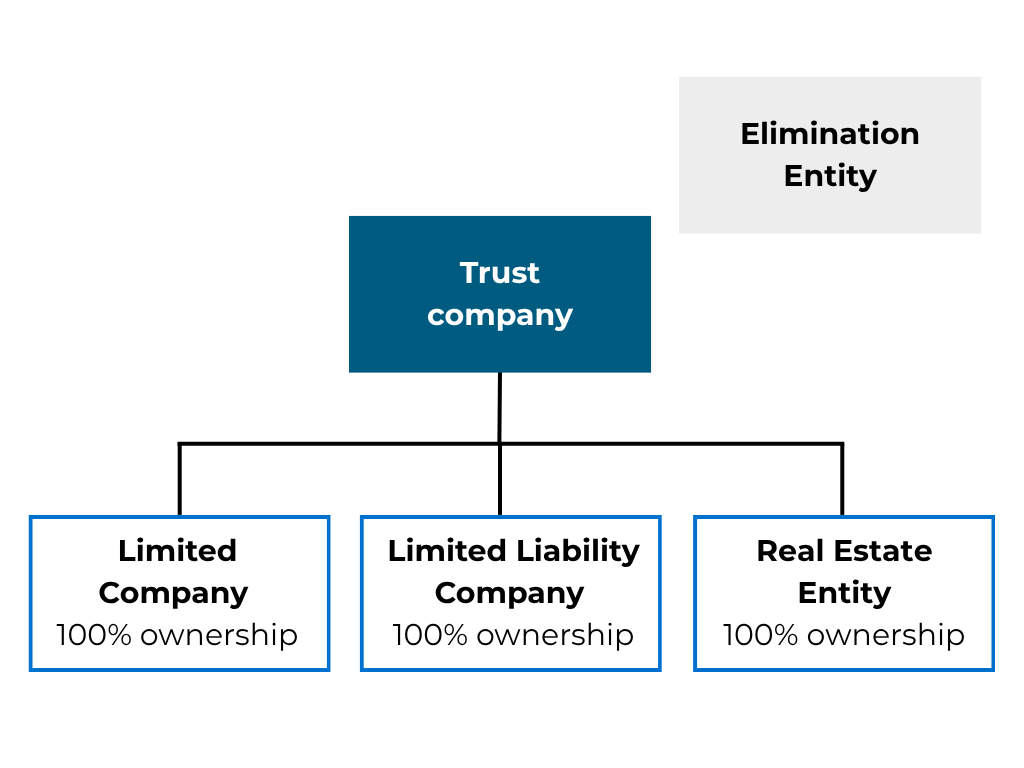
While every organization is different, those aligned to this maturity level often involve one parent or trust company who owns 100% of all entities.
2. Domestic Consolidations: Standardization and Speed
As organizations expand within a single currency, the next stage is typically domestic consolidation. This stage introduces:
- Automated intercompany eliminations
- Real-time consolidation reporting
- Improved audit trails and transparency
While the structure of your entity may match that of the above image, the key difference is technology enablement. Instead of manually recreating entries each month, Sage Intacct handles the processing, allowing finance teams to focus on review and analysis.
Success depends on disciplined design. Without consistent intercompany account structures, even month end reconciliations can still be a challenge.
3. Global Consolidations: Managing Currency Complexity
When organizations operate across multiple currencies, consolidation becomes significantly more complex.
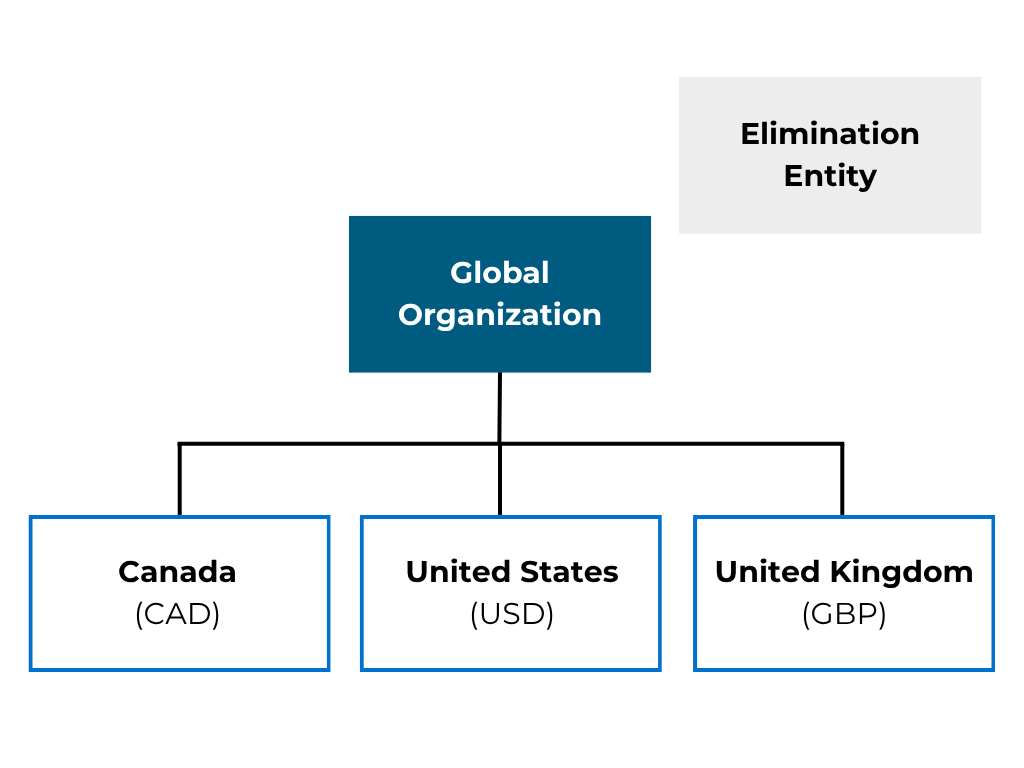
Global capabilities enable:
- Currency translation into a single reporting currency
- Auto-generated entries to record currency translation gains and losses
- Multiple reporting views, such as local and global
At this stage, finance teams gain a more complete view of performance. At the same time, policy decisions, such as foreign exchange treatment, become critical to maintain consistency and trust in reporting.
4. Advanced Ownership: Reflecting Real-World Structures
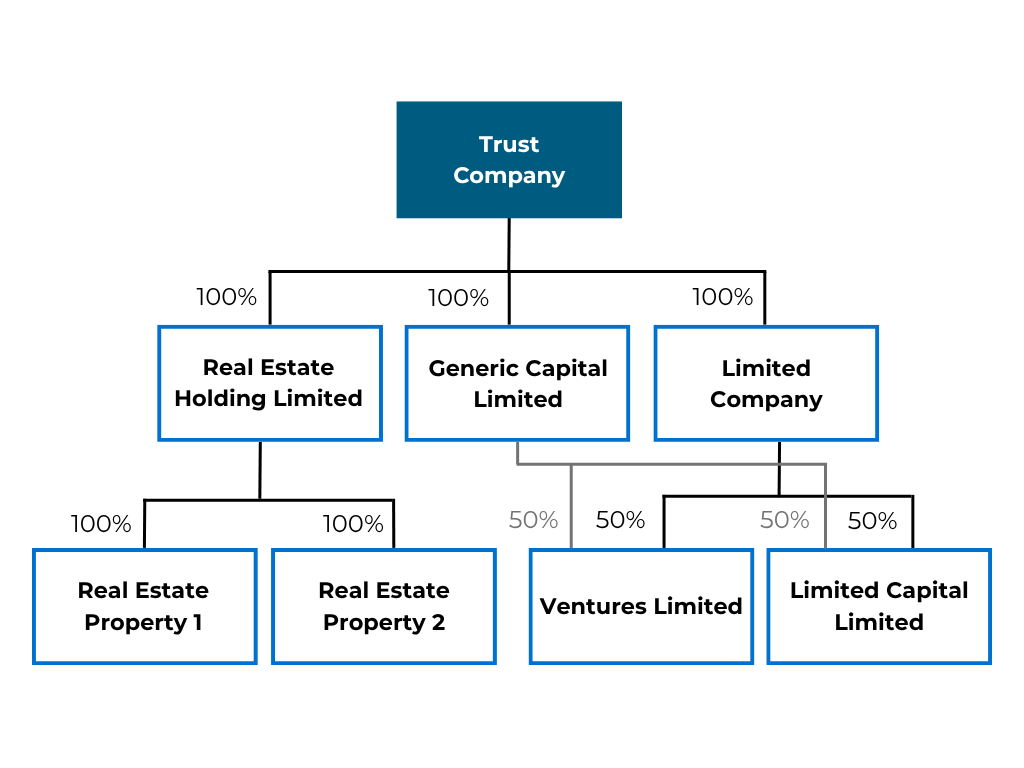
Organizations with partial ownership or multi-level hierarchies require more sophisticated consolidation approaches. Advanced Ownership functionality within Sage Intacct supports:
- Partial ownership calculations
- Multi-tier entity roll-ups
- Equity method accounting
- Dynamic ownership structures over time
These capabilities are essential for accurately reflecting complex organizational structures, particularly in private equity-backed or multi-generational family offices. CrossCountry has explored how these structures apply specifically to family offices using Sage Intacct.
How should finance teams approach consolidation improvement?
The most effective consolidation improvements share a common pattern: they address process design before configuration changes. Automation accelerates what already works; it amplifies what does not. High-performing finance teams consistently do the following:
- Standardize intercompany structures early to reduce downstream reconciliation complexity
- Use repeatable journal frameworks instead of rebuilding entries from scratch each period
- Establish a defined month-end close process with clear ownership and documented steps
- Use reporting tools intentionally to validate consolidation outputs, not just display them
When organizations align their Sage Intacct configuration to their actual consolidation maturity stage, close cycles accelerate, data becomes more reliable, and finance leadership gains faster access to the insights that drive decisions. The goal is not just a faster close; it is a more useful one. CrossCountry Consulting can help you get there.